
TSMC co-chief operating officer Y.P. Chyn says Nighthawk, the Taiwanese chipmaker’s experiment with night shifts for research engineers, failed after six months. A profile of former senior R&D executive Wei-Jen Lo credits it with cutting a development cycle to one-third of its previous length.
Those are strikingly different verdicts on a program meant to help TSMC develop its 10nm manufacturing process. Chyn delivered his assessment on October 29, 2026; Lo’s profile had appeared the previous year. Neither account supplies the internal measures that would let an outsider reconcile them. But an engineer’s account of working under Nighthawk reveals how the program could move experiments forward while leaving an important problem unresolved: the people responsible for those experiments still worked too long. Chyn’s speech, Lo’s profile.
| Y.P. Chyn | Wei-Jen Lo |
|---|---|
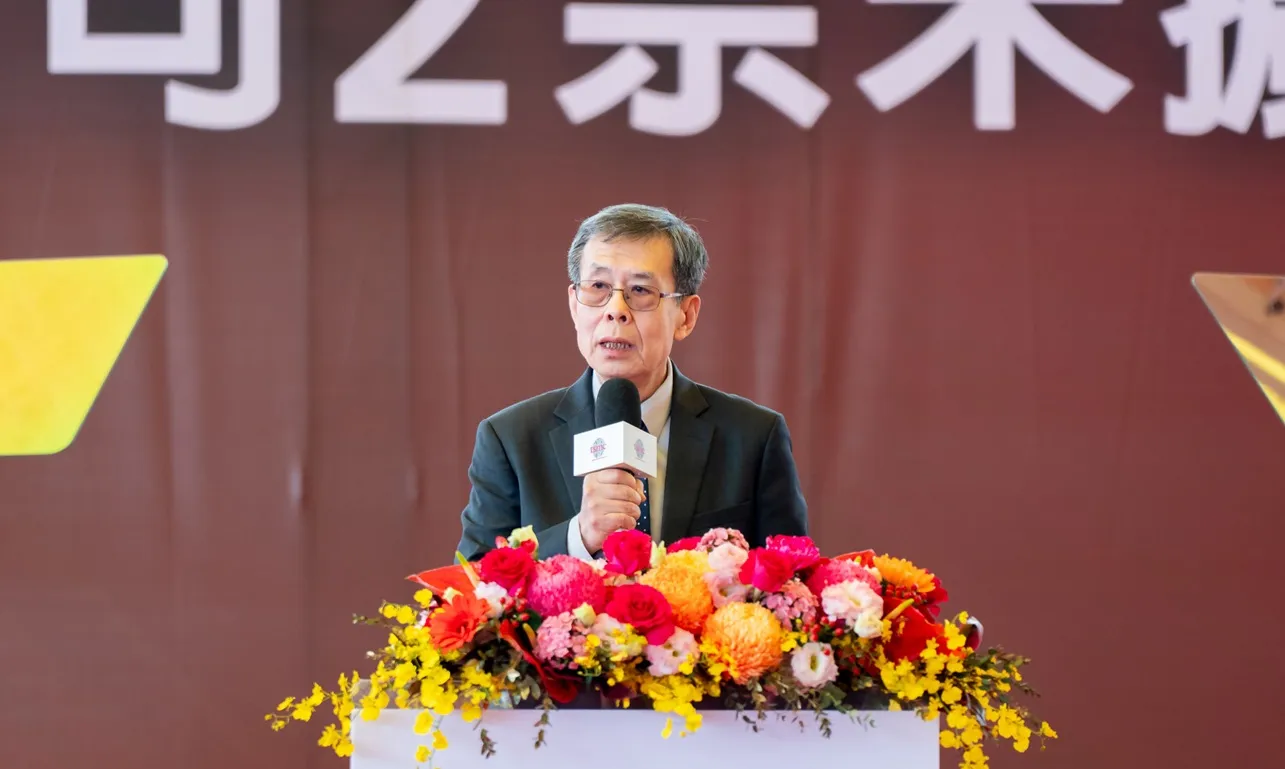 |
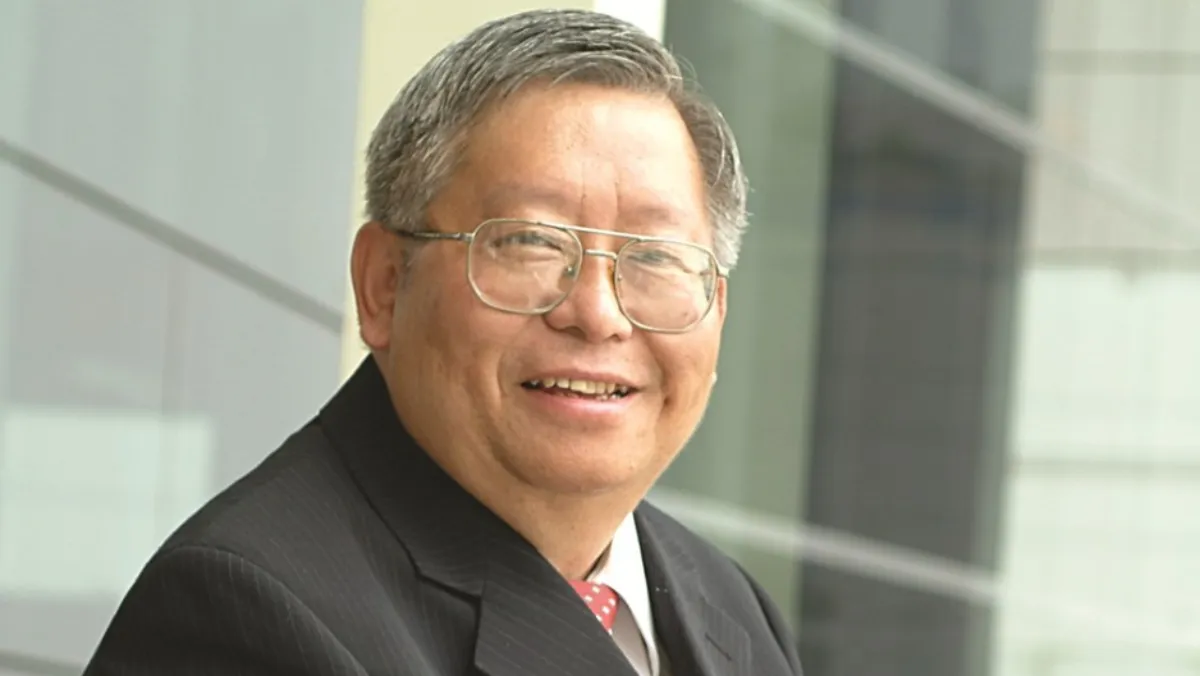 |
Separate photographs of Y.P. Chyn (left) and Wei-Jen Lo (right). Image credits: Taiwan Semiconductor Manufacturing Co., Ltd., via ITRItech and TaiSounds, respectively.
The experiment outlasted the shift
The problem behind Nighthawk was familiar to anyone whose work depends on a test finishing. An engineer could spend more than ten hours at work and still be waiting for an experiment to end. Someone had to deal with what happened next. In practice, that could mean another late night for the same engineer.
When TSMC announced Nighthawk in 2014, it planned to recruit hundreds of engineers for shifts supporting 10nm development. A spokesperson described three groups working eight hours each. The company wanted continuous R&D and a more orderly alternative to daytime staff repeatedly extending their hours. Contemporary reporting, MoneyDJ.
The difficulty was handing over the thinking. An anonymous R&D supervisor, who had spent more than a decade at TSMC and led a small advanced-process team, told Wealth Magazine that engineers approached problems differently. The person taking over an experiment did not necessarily understand the reasoning of the person who designed it. Other specialist teams were also unavailable for discussion at night. Night work therefore tended toward keeping existing work going; new experimental designs and discussions across departments remained concentrated in the daytime.
After more than a year, the supervisor saw some improvement, but excessive overtime was still hard to resolve. That is the most useful account of Nighthawk’s operating limits: a handover could keep an experiment running without giving its original owner a clean stopping point. Wealth interview.
This makes a partial success quite plausible. More results might be ready in the morning, yet the daytime team would still need to interpret them and agree on the next experiment. The equipment could become more productive without the engineers’ workload falling. How much faster the whole project moved would depend on whether it was waiting for experimental results or for decisions about what to try next.
What Lo’s account adds
Lo’s profile describes a larger operation than a roster of night-shift engineers. TSMC built an advanced-process development platform that ran seven days a week and worked with equipment suppliers through an around-the-clock response team. Process development and equipment development could proceed together, with problems addressed as they arose. Lo also emphasized clear shift arrangements, incentives and staff rotation.
Supplier support changes the proposition. When an experiment depends on a tool problem being resolved, keeping TSMC engineers on site achieves little if the people who can fix the tool are unavailable. Bringing the supplier into the operation gives those extra hours a practical use. The arrangement described in Lo’s profile therefore contains a credible way to accelerate development, even where handovers between researchers remain difficult.
The profile attributes a reduction in development time to one-third to this operation. It does not define the start and end points of that cycle or the comparison used. That leaves a substantial claim of progress, but no basis for treating it as a threefold increase in total R&D productivity. Lo’s profile.
One Team complicates the rivalry
Chyn’s preferred lesson was cooperation. TSMC had learned painfully that a process working in development could run into trouble when transferred to a factory. During its 40nm difficulties in 2009, R&D directors joined factory engineers to examine process design, operating conditions and defects. This work was already under way years before Nighthawk became public. TSMC’s earnings-call transcript, pp. 4–7.
Under the One Team approach that Chyn described for the 28nm generation, manufacturing staff joined development earlier. A lead factory, known as the mother fab, worked through major problems before the process moved to other plants. Factory constraints could influence development before a formal transfer made them someone else’s problem. Chyn’s profile.
It would be easy to cast Chyn as the champion of cooperation and Lo as the executive who wanted everyone to work harder. Lo’s record resists that reading. He led an equipment-selection committee spanning R&D, operations and purchasing, and pressed suppliers to meet production requirements. In the same profile that praises Nighthawk, he describes a shared commitment with Chyn and fellow executive Y.J. Mii to cooperation between development and manufacturing. CommonWealth, No. 830, Lo’s profile.
Later reporting on TSMC’s 2nm development describes design, process-module and manufacturing specialists revisiting the overall process as individual steps improved. That kind of collaboration can change the experiment a team chooses to run. A night shift gives the team more time to run it. Both can be useful, and the history gives no reason to treat One Team as an invention that followed Nighthawk’s failure. (Wealth Magazine, No. 743.)
The strongest explanation available for the opposing verdicts is their different scope: the positive account emphasizes a continuous development operation with supplier support; the negative verdict concerns an R&D shift experiment whose success criteria remain unspecified. The supervisor’s account shows where benefits and disappointments could coexist. It does not tell us which mattered most to either executive.
There is also a price missing from both verdicts. A shorter development cycle may justify extra staffing and supplier support when a customer’s product launch is at stake. The same arrangement could be expensive as routine practice. Without comparable spending and labor figures, technical progress cannot settle that question.
Nighthawk’s most revealing outcome may be the supervisor’s modest assessment: some improvement, with overtime still unresolved. Keeping an experiment moving overnight could bring the next result closer. The harder handover was the reasoning needed to decide what to do with it.
Sources
- Economic Daily News. “TSMC’s Night-Shift R&D Plan Halted After Six Months; Chyn Recounts the 40nm Setback.” October 29, 2026.
- Industrial Technology and Information. “ITRI Laureate Wei-Jen Lo: Integrity and an Enterprising Outlook.” Republished by UDN.
- Economic Daily News. “TSMC Deploys Nighthawk to Overtake Intel in Two Years.” June 25, 2014. Reproduced by SEMI.
- MoneyDJ. “TSMC Launches Nighthawk to Accelerate Advanced 10nm Development.” June 25, 2014.
- Wealth Magazine. “A TSMC R&D Engineer: We Do High-Pressure Work in a High-Pressure Environment.” Syndicated by MoneyDJ.
- Liang-Rong Chen. “Two Battles That Widened the Lead: Who Is TSMC’s Most Mysterious Veteran?” CommonWealth Magazine, No. 830.
- Wealth Magazine. “The Secret Weapon Behind TSMC’s 2nm Campaign.” No. 743.
- TSMC. Second-Quarter 2009 Earnings-Call Transcript. July 30, 2009, pp. 4–7.
- TSMC. 2016 Annual Report, “Technology Leadership.”
- Industrial Technology and Information. “A Key Architect of TSMC’s Manufacturing Standards.” Republished by ITRItech.
Updated Oct 30, 2026