
AI has not revived every part of the substrate market. The real shortage is in high-end ABF capacity for large, multilayer AI chips, and in the equipment and process control needed to produce those substrates at a stable yield.
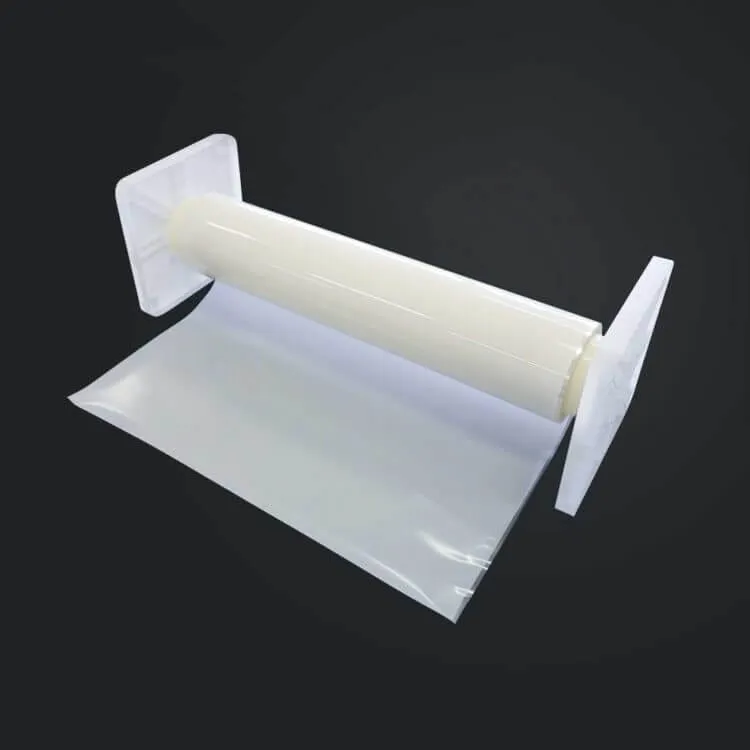
Ajinomoto Build-up Film, the interlayer insulating material used to build fine circuitry in high-performance chip substrates. Image provided by Ajinomoto Group. Source: Ajinomoto Group.
Manufacturing difficulty helps explain why demand and pricing can diverge across the substrate market.
Lower-end ABF substrates used in personal computers and smartphones may still face excess capacity. At the same time, GPUs, ASICs, and high-speed switching chips for AI servers require larger substrates, more layers, and lower signal loss. Industry estimates cited by 財訊 (Wealth Magazine) suggest that an AI chip may need 2.6 to 3 times as much substrate area as a conventional chip. The layer count may also rise from 12 to more than 18.
This is not merely an increase in the number of substrates. Each unit consumes more material, takes more equipment time, and leaves less room for yield loss.
The most useful question is therefore not whether ABF is in short supply. The question is which companies can manufacture high-end products, improve yields, and deliver on time while both materials and equipment remain constrained.
ABF Has Become Two Different Markets
ABF stands for Ajinomoto Build-up Film. It is an interlayer insulating material used in package substrates for high-performance chips. It allows copper circuits to be built up layer by layer.
As a chip becomes larger and gains more input and output channels, the substrate must also grow. It needs more layers and finer circuitry. It must also control warpage when exposed to heat.
This has divided the ABF market into two distinct segments. Consumer electronics still drive demand for lower-end products. AI infrastructure drives demand for high-end substrates. The two segments share the same general name, but they serve different customers and require different materials, production processes, and yield levels.
Nominal capacity is also a poor measure of high-end supply. The number of production lines in a factory does not tell us how many qualified substrates the factory can deliver. Material allocations, equipment lead times, customer certification, and production yield determine effective capacity.
This explains why substrate makers can announce new plants while the market still expects high-end supply to remain tight through 2027 or 2028.
Money Can Build a Factory, but It Cannot Instantly Buy Materials or Yield
The first constraints are appearing in materials. High-end substrates require T-glass fabric with a low coefficient of thermal expansion, smoother copper foil, and higher-specification drill bits. ABF supplied by Ajinomoto Co., Inc. is another critical input. Wealth Magazine reports that Ajinomoto controls more than 90% of this market.
When supply becomes tight, substrate makers face more than a pricing problem. They also need to secure enough allocation to operate their new capacity.
Equipment creates a similar problem. Exposure, electroplating, lamination, drilling, and inspection systems take time to manufacture, install, and qualify. 天下雜誌 (CommonWealth Magazine) reported that delivery times for some equipment had increased from 12 to 14 months. End customers have even become involved in coordinating material and equipment allocations so that every part of the supply chain expands on the same schedule.
Forecasts do not agree on the exact size of the future shortage. Some estimates cited by Wealth Magazine are more conservative, while other reports project a larger gap. The precise percentage should not be treated as certain. However, the reports point in the same direction: new demand may grow faster than qualified high-end capacity.
Unimicron Is Near the Front, but Long-Term Contracts and Yield Still Matter
Unimicron Technology Corp. (欣興電子) is one of the most direct beneficiaries of high-end ABF demand among Taiwan’s four major substrate makers. It has established an important position in GPU and ASIC substrates. Its existing high-end lines are reportedly close to full utilization.
In the near term, Unimicron plans to increase output by removing bottlenecks. New capacity will follow later.
Its advantage is not only scale. The company already participates in joint development with customers. When Intel Corporation changes the specifications of EMIB-T or another advanced packaging platform, the substrate supplier cannot wait until the chip design is complete. It must develop the substrate alongside the packaging solution.
That position also creates two risks. The first is yield. Early-stage yield for next-generation substrates still has substantial room for improvement. Nominal capacity will not immediately become shippable capacity.
The second risk comes from long-term agreements. These contracts improve order visibility, but they may limit pricing flexibility when supply becomes tight.
Nan Ya PCB Is Betting on Size, While Kinsus Is Betting on Production Control
Nan Ya Printed Circuit Board Corporation (南亞電路板) describes joint development of large-area, high-layer-count substrates for next-generation AI server ASICs, CPUs, and high-speed switch chips in its August 27, 2026 briefing. The same presentation attributes part of its second-quarter growth to mass production of substrates for 1.6T switches. These disclosures provide concrete product context without treating every planned advanced-packaging application as qualified production.
Existing production and future development need to be assessed separately. Revenue from an already shipping switch substrate does not establish the yield or qualification status of a different, next-generation package. Expanding larger, more complex products still requires investment in process stability.
A higher selling price becomes profit only when yield and utilization improve at the same time.
Kinsus Interconnect Technology Corp. (景碩科技) is following a different path. It is moving up from a secondary supplier position and has secured CPU and GPU substrate orders from US server customers. Wealth Magazine reports that Kinsus plans to increase monthly ABF capacity by about 25% by early 2027, with further expansion under consideration.
Kinsus learned a costly lesson in the past: winning an order does not guarantee successful mass production. It has therefore invested in sensors, production-line digitalization, and AI vision inspection at its K6 factory in Taoyuan.
A September 8, 2025 CommonWealth Magazine report described yield improvement from about 80% to more than 90% at Kinsus’ new factory. That figure concerns the reported factory and period; it is not a comparable yield score for every high-end ABF product or for competing manufacturers.
Kinsus’ chairman’s message reviewing 2025 and outlining 2026 separately describes progress in large, high-layer-count ABF products and plans to upgrade Xingfeng and expand the Youth plant. It supports the direction of the company’s investment, but does not independently establish the magazine’s exact yield or monthly-capacity figures.
Zhen Ding Is Betting on the Entire AI Interconnect System
Zhen Ding Technology Holding Limited (臻鼎科技控股) produces flexible printed circuit boards, rigid boards, high-density interconnect boards, substrate-like PCBs, and IC substrates. Its exposure to AI demand is therefore different from that of the other three companies.
An AI server upgrade does not occur only underneath the chip. Motherboards require more layers. Optical modules are moving from 800G to 1.6T. Modified semi-additive processing, or mSAP, is also entering high-speed transmission boards.
Zhen Ding can seek growth in IC substrates, high-end rigid boards, and optical communication boards at the same time. Its September 2, 2026 SEMICON Taiwan announcement lists optical-module products at 800G and 1.6T alongside AI server boards with up to 34 layers. That product mix illustrates the breadth of the opportunity; an exhibition announcement does not by itself establish volume shipments or the profitability of each line.
This broader portfolio can reduce dependence on one product cycle, but it makes execution more difficult. The company must divide large capital investments across several factories and product lines. Each new line must pass customer certification and improve yield.
The most useful measure is not how much Zhen Ding announces that it will invest. It is how much new capacity completes customer qualification and begins stable production.
Equipment Suppliers May Get Paid Before the New Capacity Produces Revenue
Substrate makers must build new factories, qualify products, and begin shipments before they receive the full benefit of expansion. Equipment suppliers may recognize revenue earlier because their machines must be ordered during the construction stage.
Eternal Precision Mechanics Co., Ltd., or EPM (長廣精機), is one of the clearest examples. Wealth Magazine reports that EPM has worked with Ajinomoto for more than 20 years and holds about 95% of the global market for vacuum lamination equipment used in ABF substrate production.
When Unimicron, Nan Ya PCB, Kinsus, and Zhen Ding expand high-end capacity at the same time, they all need lamination equipment.
EPM’s advantage is not limited to the mechanical hardware. Vacuum lamination must control film handling, pressure accuracy, air bubbles, and surface flatness. When material specifications change, machine parameters must change as well. The ability to develop processes with material suppliers and customers is more valuable than simply increasing machine output.
Ta Liang Technology Co., Ltd. (大量科技) addresses another bottleneck. Multilayer PCBs require more precise back drilling and tighter control of residual copper. Ta Liang integrates inner-layer measurement, CCD imaging, proprietary controllers, and back-drilling equipment.
Wealth Magazine reports that Ta Liang is also a qualified supplier of residual-copper inspection equipment for PCBs associated with NVIDIA Corporation. It is extending the same capabilities into optical modules, co-packaged optics, and advanced packaging inspection.
Equipment suppliers do not need to predict which substrate maker will win the most business. They can benefit when the entire industry increases capital spending. However, this model still carries risk.
Equipment revenue can fluctuate with customer acceptance schedules. Customized systems also consume engineering resources. If every order requires extensive redesign, revenue growth may not produce the same rate of profit growth.
Glass Core Substrates Will Not Immediately Replace ABF
Glass core substrates are often described as a replacement for organic substrates, but this is unlikely to be a simple choice between two materials. Glass offers better flatness and dimensional stability. Its outer build-up layers may still use ABF or similar materials.
In the near term, glass, ceramic, and organic materials are more likely to coexist for different packaging applications.
For Taiwan’s supply chain, this means that equipment must handle more combinations of materials. Glass can crack during drilling, cutting, and lamination. Organic materials face warpage and thermal stress.
Equipment suppliers that can control coating, lamination, drilling, handling, and inspection may move closer to the customer’s core process. That position could be more defensible than supplying a single standard machine.
AI chips concentrate more computing power inside one package. They also concentrate supply-chain risk in the ability of substrate makers, material suppliers, and equipment companies to move in step.
The winners in this cycle may not be the companies that announce the largest expansion plans. They are more likely to be the companies that can align materials, equipment, yield, and customer qualification at the same time.
The true scarcity in high-end ABF is not factory space. It is a supply network that can deliver stable mass production.
References
-
劉志明, “載板四雄、設備廠進入黃金成長期” (“Taiwan’s Four Leading Substrate Makers and Equipment Suppliers Enter a Golden Growth Period”), 財訊 (Wealth Magazine), Issue 771, August 27, 2026.
-
林苑卿, “完全解讀 ABF載板缺貨真相” (“Understanding the Real Cause of the ABF Substrate Shortage”), 財訊 (Wealth Magazine), Issue 771, August 27, 2026.
-
周佳蓉, “AI載板續享漲價紅利” (“AI Substrates Continue to Benefit from Price Increases”), 先探投資週刊 (Wealth Invest Weekly), Issue 2418, August 19, 2026.
-
鄧凱元, “景碩PCB良率提升九成以上 250億打造AI產線,改造了什麼?” (“Kinsus Raises PCB Yield Above 90% After Investing NT$25 Billion in an AI Production Line”), 天下雜誌 (CommonWealth Magazine), September 8, 2025.
-
Nan Ya PCB, 2026H1 Operation Briefing, August 27, 2026, printed pages 4 and 9.
-
Kinsus, Message from the Chairman, 2025 review and 2026 outlook; accessed October 16, 2026.
-
Zhen Ding, SEMICON Taiwan 2026 product announcement, September 2, 2026.
Updated Oct 16, 2026