
How does a component supplier persuade a cloud giant to adopt its design while accepting that the customer may hand that design to another manufacturer? That is the tradeoff facing Taiwanese manufacturer Nan Juen International, a supplier of server rails (slides).
Nan Juen sells rails under the REPON brand and competes with King Slide, which holds an extensive portfolio of rail patents. For the newcomer, one condition of winning orders is allowing customers room to develop other suppliers. Nan Juen has chosen to license its designs, then rely on joint development, manufacturing speed, and delivery capabilities to retain the business.
How a Small Component Becomes a Barrier to Cloud Procurement
Server rails mount on either side of a chassis, allowing technicians to pull it out of a rack. They must support weight in a confined space while enabling smooth movement, secure locking, and installation and removal. In a data center, those functions affect both the safety of expensive equipment and the labor required to install and service it.
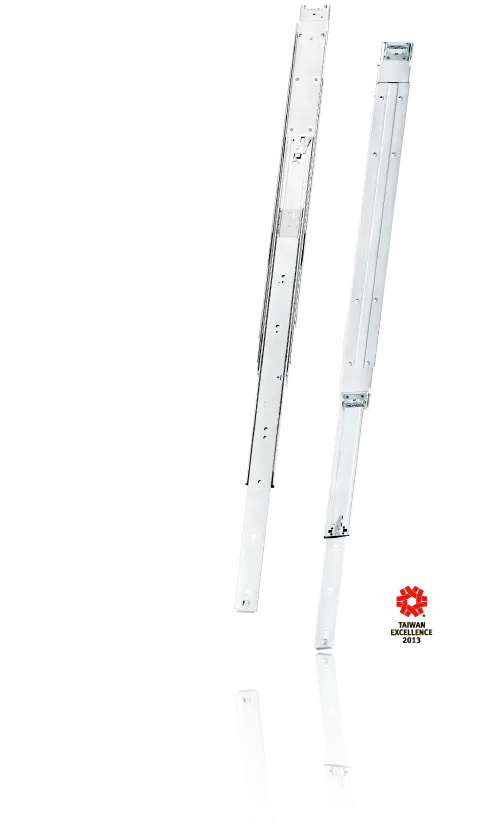
Figure 1: Nan Juen REPON NJ-21D58 server rails. Image source: Nan Juen International’s official product page.
King Slide General Manager Lin Shu-Chen describes rails as safety components. The company’s designs include tool-free installation and mechanisms that let operators release locks and remove trays from a position close to their bodies. Such seemingly small mechanical improvements have accumulated into products and patents, requiring new suppliers to meet functional, qualification, and intellectual property requirements at the same time.
Nan Juen General Manager Jen-Shan Wu recalls spending six years looking for a way into the server market. He personally visited assemblers, only to hear the same response: without qualification and approval from the end customer, they would not use the company’s products. Being able to make a rail was still a long way from securing a place in the customer’s supply chain.
The opening came in 2019. Wu says Microsoft was looking for new suppliers, giving Nan Juen a chance to engage directly with the end customer and pass product qualification. The negotiations that followed moved beyond whether the product worked to who would be allowed to use its design.
Accepting Licensing Terms—and the Customer’s Right to Alternative Sources
Wu says cloud customers, including Microsoft, required Nan Juen to license its design intellectual property so that other suppliers could also use the designs. The choice was straightforward: accepting the terms was necessary to win orders, even though licensing could make it easier for future competitors to enter.
The proposal met resistance within Nan Juen. Design capabilities built over many years were an asset that helped the company differentiate itself; making those designs available to customers would reduce its control over supply arrangements. Wu’s judgment was that, before establishing its position in the industry, the company needed to make concessions to gain an opportunity to win market share.
From a procurement perspective, such an arrangement gives customers another option: they can adopt a supplier’s design while retaining the possibility of sourcing production elsewhere. For Nan Juen, the cost is having to prove continually that orders will be easier to fulfill with the incumbent than with a new supplier.
That also shifts the basis of competition. Licensing gives Nan Juen an opportunity to participate, while placing more of the burden of retaining orders on day-to-day engineering responsiveness, product quality, and production planning.
Keeping Orders Through Joint Development and Production Capacity
Wu points to the engineering team’s work alongside customers during testing. On one occasion, Nan Juen spent three or four consecutive days working with a customer in a laboratory, completing modifications within an hour of receiving a request. That responsiveness lets the customer resume validation sooner, reducing the time design problems hold up subsequent work.
Production location is part of the relationship, too. Wu says Nan Juen set up a factory in Vietnam to accommodate customers’ supply chain policies. The Vietnam operation listed in the company’s second-quarter investor presentation is already a dedicated server rail plant, with three complete production lines organized by product series. When customers need overseas manufacturing, Nan Juen can offer actual capacity.
In Taiwan, Nan Juen’s Yunke plant integrates steel coil slitting, roll forming, stamping, surface treatment, and assembly. Turning a design change into a product that can be shipped consistently requires tooling, process engineering, and quality control. How well those functions keep pace determines how far engineering support can go. Nan Juen’s second-quarter investor presentation lists product development, tooling design, and equipment development among its integrated capabilities.
The company is still catching up. Nan Juen CFO Chung-Jen Jen has said that slower new product introductions than its peers were one reason for its limited share in NVIDIA GB-series rack systems. Nan Juen is building up its portfolio of product designs to shorten development time. Meanwhile, King Slide draws on years of accumulated components, tooling, and in-house manufacturing capabilities to accelerate custom product development. Both are pursuing the same objective: keeping pace with customers’ next-generation equipment schedules.
Managing Patent Risk Alongside Product Design
Making its own designs available to customers addresses the terms of use between Nan Juen and those customers. Competitors’ patents remain a separate set of constraints on new product development.
Wu has encountered that problem firsthand. After his team had designed a new feature for a customer and the product had entered testing, a patent publication revealed that a competitor had already filed for patent protection covering a related design. Nan Juen revisited the design constraints, made changes, and tested again. Winning customer qualification took several additional weeks. Patent issues thus became a direct factor in the delivery schedule.
Nan Juen established a patent engineering team in 2022. Wu says the team reviews relevant patent publications three times a month and commissions a patent firm to assess infringement risks before samples are sent out. The company monitors competitors’ patent activity while filing patents for its own designs, making this work part of product development.
Nan Juen’s tradeoff is to use greater licensing flexibility to establish customer relationships, then invest in engineering and manufacturing capabilities to earn repeat orders. As product generations turn over faster, that approach also requires earlier identification of patent risks, so the company can avoid the cost of redesign and requalification when a design is nearly complete.
Sources
- Zhang Ruxian, “Navigating King Slide’s 40-Year Patent Minefield: How Is Nan Juen Competing to Become the No. 2 AI Server Rail Supplier?” Business Weekly, issue 2031, abridged edition, pp. 30–32.
- Deng Kaiyuan, “From Furniture Hardware to Earnings per Share That Surpass TSMC: How Did the Couple Behind King Slide Build a Rail Business That Dominates NVIDIA’s Supply Chain?” CommonWealth Magazine, issue 848.
- Chen Liangrong, “AI Rack Rail Leader King Slide: With Gross Margins Above 80%, Higher Than NVIDIA’s, Is Earning More Than Your Customer a Cardinal Sin?” CommonWealth Magazine, issue 857.
- Nan Juen International, 2026 Second-Quarter Investor Presentation, pp. 9, 15–17.
- Nan Juen International, NJ-21D58 Server Slides.